

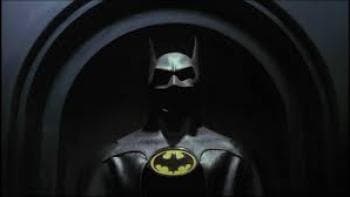
Gotham's Knight Returns: A Deep Dive into the Dark Majesty of 1989's Batman
Holy nostalgia for Batman fans! When "Batman" is mentioned, images might flash in your mind. Perhaps Adam West's campy charm or Christian Bale's gravelly growl comes to mind. But for many, it began with Tim Burton's 1989 Batman. This gothic masterpiece set the stage for the superhero genre. Let's explore this film's brilliance and depth.
Is Batman 1989 Still a Good Batman Movie? Spoiler: Yes.
Is Batman (1989) a good Batman movie? Yes, it is. It's groundbreaking. Burton’s Gotham City became a character itself. It was dark and decaying, filled with gothic elements. This was not your bright cartoon Batman. It had depth and atmosphere.
The visuals were stunning. Anton Furst’s design created a fantastical yet real Gotham. Gargoyles were not mere decorations; they were symbols of despair. The film balanced darkness with quirky sensibility. It was not just a comic book movie. It resonated emotionally and was genuinely unsettling.
And the performances? Michael Keaton silenced doubts with his portrayal of Bruce Wayne/Batman. He captured the Dark Knight’s brooding intensity and Bruce’s vulnerability. Jack Nicholson’s Joker was legendary. He became the Joker, oscillating between terror and humor. Batman and Joker are two sides of a coin, and they embodied this perfectly.
In short, Batman (1989) isn't just good; it redefined the superhero genre. It captured Batman’s essence and brought Gotham to life in a unique way. It stayed true to the comics while providing its own spin, shaping the future of superhero films.
Why Did Batman 1989 Become a Cultural Phenomenon?
Batman (1989) became a massive cultural phenomenon. Remember Batmania? It was very real. But why did this film resonate so deeply with audiences?
Timing played a crucial role. The late 1980s demanded a darker superhero. Frank Miller's works like The Dark Knight Returns had already set the tone for a mature audience. Burton's film captured this perfectly. It wasn't campy; it felt serious and compelling.
Marketing also played a huge role. Warner Bros. launched an iconic campaign using the bat-symbol everywhere. "I'm Batman" became a catchphrase. The trailers expertly captured the film's tone. The anticipation reached a fever pitch. The film met those expectations.
Furthermore, Batman (1989) was simply cool. The Batmobile was sleek, the Batsuit imposing, and the aesthetics dripped with style. It was an event everyone wanted to see. It proved that superhero films could be dark and successful, paving the way for today's superhero movie boom.
Oscar Buzz and Beyond: Did Batman 1989 Get the Recognition it Deserved?
Did Batman (1989) get an Oscar nomination? Yes, it did! While it didn’t dominate all categories, it gained recognition. It won the Academy Award for Best Art Direction. That win acknowledged the film's stunning visual design, crucial for creating an immersive Gotham.
The film received nominations across various awards. Michael Keaton earned a BAFTA Award for Best Actor in a Supporting Role nomination. It also received nominations for the Golden Globe Award for Best Actor, showcasing its appeal.
Additionally, Batman (1989) won People's Choice Awards for Favorite Motion Picture. Keaton won Favorite Movie Actor too. These wins highlighted the film's impact beyond critical acclaim. It resonated with audiences and captured their imaginations.
Though Batman (1989) didn’t sweep the Oscars, it received significant recognition for artistic achievements. It left a lasting legacy as a landmark superhero film. The film won over both audiences and critics, solidifying its place in cinematic history.
The Bat-Pack: Unpacking the Cast and Characters of Batman 1989
Now, let's discuss the cast that brought Gotham to life. The cast of Batman (1989) was iconic. Each actor delivered memorable performances. Let’s delve into key players.
Kim Basinger as Vicki Vale: More Than Just a Damsel
Kim Basinger played Vicki Vale, the dedicated photojournalist in Batman’s world. But who was Vicki Vale, really? What happened to her after 1989?
Basinger was about 35 years old when Batman (1989) released. Time flies! Someone humorously noted their age now, proving that Batman (1989) resonates as a generational touchstone.
Why didn’t Vicki Vale return for Batman Returns? Originally, she was intended to appear. Sam Hamm's draft included her. However, Tim Burton wanted new characters and themes. So Vicki Vale was excluded from that story.
In the context of the Batman universe, what actually *happened* to Vicki Vale? In Batman Returns, Bruce mentions that they broke up. Vicki could not reconcile Bruce's two identities. She struggled with the double life and found it overwhelming.
In Batman (1989), Vicki Vale is not just a damsel. She’s intelligent, brave, and curious. She serves as the audience's window into Gotham's bizarre world. While her romance with Bruce seems rushed, Basinger brings strength to the role, making Vicki an unforgettable part of Batman's story.
Michael Keaton: The Unconventional Bat Who Became a Legend
Michael Keaton as Batman? In 1989, he was an unconventional choice. Many were skeptical at first. But Keaton proved them wrong with his performance. He captured Batman's essence, establishing a legacy that endures.
was a casting choice that raised eyebrows. Then it shut down all doubts. Keaton wasn't the muscle-bound superhero type. He brought inner turmoil and quirky intensity to the role.
When Keaton first donned the cowl in Batman (1989), he was 37 years old. This is the same age Adam West was when he played Batman in the 1960s TV series. However, the similarities pretty much end there. West's Batman had campy charm, while Keaton's was brooding darkness.
How much did Keaton get paid for saving Gotham? Reportedly, he earned $5 million for Batman (1989). Adjusted for inflation, that's like $10 million now. Not bad for one night of work fighting crime in a rubber suit. For the sequel, Batman Returns, his salary nearly doubled.
Considering the first film raked in over $250 million, it's safe to say he was worth every penny. Despite the success and paycheck, Keaton didn't return for Batman Forever. Why? Creative differences, a classic Hollywood cliché. In this case, it was genuinely true.
Joel Schumacher took over directing duties from Tim Burton. Schumacher had a different vision for Batman. Keaton felt that Schumacher's approach was too far from the darker tone Burton established. He wanted to explore Bruce Wayne's psyche, the trauma and motivations that drove him to become Batman.
Keaton saw Bruce as quirky, not always sure of himself, which contrasted with the more stoic portrayal. Ultimately, the creative clash led Keaton to walk away from the role. He left the Bat-cowl for Val Kilmer.
You might wonder why Michael Keaton doesn't use his real name, Michael Douglas. It relates to Hollywood rules. The Screen Actors Guild (SAG) prohibits members from using the same name as another member. Since there was already a famous Michael Douglas, Keaton adopted a stage name early in his career. And Keaton stuck.
Lastly, for those interested in his off-screen persona, Michael Keaton is politically active. He supports the Democratic Party. He publicly endorsed Barack Obama, Hillary Clinton, and Joe Biden in elections. If Batman had political affiliations, it seems Keaton's leanings are clear.
Michael Keaton's Batman redefined the character. You didn’t need a comic book physique to embody the Dark Knight. His nuanced performance blended vulnerability with intensity and set a new standard for superhero acting.
Jack Nicholson: Laughing All the Way to the Bank as the Joker
Jack Nicholson as the Joker sends chills down your spine, doesn't it? Nicholson's portrayal in Batman (1989) was seismic. He didn't just play a villain; he created an icon.
What happened to Nicholson's Joker? Things didn't end well for the Clown Prince of Crime. During a showdown with Batman atop a cathedral in a climax, the Joker meets his demise. Batman grapples him with a gargoyle. Gravity does the rest.
The gargoyle breaks loose, sending the Joker plunging to his death. Later, Commissioner Gordon finds the Joker's body with a laugh box still cackling in his pocket. Talk about dying with a punchline.
To achieve Nicholson's iconic look, makeup artists went all out. It wasn't just slapping on face paint. They used multiple layers. First, a base of PAX paint created that stark white complexion.
Then silicone oil went on top. This helped prevent sticking and gave it an unsettling sheen. It was meticulous work but resulted in a striking look that transformed Nicholson into the grinning agent of chaos.
Now, let's talk money. How much did Nicholson make for his Oscar-worthy Joker performance? Brace yourselves. He reportedly earned a staggering $60 million for Batman (1989). That’s right. Sixty million dollars.
This wasn’t just an upfront fee; Nicholson negotiated a profit-sharing deal. He took a modest upfront payment of $6 million. He also secured a percentage of the film's box office gross and merchandise sales.
Given Batman (1989)'s monumental success, that percentage added up significantly. Nicholson's deal became legendary in Hollywood, a symbol of how A-list stars can command massive paychecks.
Now, who played the best Joker? Opinions vary. However, Heath Ledger is overwhelmingly considered to have delivered the definitive performance in The Dark Knight. His portrayal was groundbreaking, redefining the Joker with chilling realism.
Ledger earned a posthumous Academy Award for Best Supporting Actor. However, Nicholson's version remains iconic, capturing the character's flamboyant madness. It's a matter of taste—chaotic brilliance vs. theatrical mayhem—both legendary.
Finally, who was the Joker's girlfriend in Batman(1989)? That would be Alicia Hunt, played by Jerry Hall. Alicia initially was the mistress of gangster Carl Grissom and secretly involved with Jack Napier before he becomes Joker.
Even after Jack's transformation, Alicia remains by his side as his villainous paramour. Tragically, she meets her end when the Joker alters her face to resemble his own, resulting in her death from shock.
Jack Nicholson's Joker was a masterclass in villainy. He brought energy, humor, and menace to the role that cemented him as one of the most iconic screen villains ever. He didn’t just play the Joker; he *owned* it.
Bat-Rankings: Sorting Out the Batman Movie Hierarchy
With many Batman movies out there, from campy classics to gritty reboots, where does Batman (1989) fit in? What are considered the best and worst of the Bat-bunch? Let's break it down.
For the "best" Batman movie, the crown often goes to The Dark Knight (2008). It consistently tops critics' and fans' lists. Lauded for its complex narrative and Ledger's unforgettable performance, it's considered a masterpiece of modern cinema.
However, Batman (1989) still ranks high. Typically, it falls within the top 10, often around the 8th spot. While it may not be hailed as the *absolute* best, it's recognized as pivotal and influential in Batman's legacy.
Its groundbreaking visuals, iconic performances, and gothic atmosphere ensure its place as a beloved entry in the Bat-canon.
The movie often cited as the "worst" Batman film is Batman v Superman: Dawn of Justice(2016). Ouch. Opinions vary, but it draws criticism for its convoluted plot and grim tone.
It's seen as "jumbled" and "CGI-addled," trying too hard to be dark and gritty, ultimately missing the mark for many viewers. Poor Batfleck deserved better.
The darkest Batman movie? That title arguably belongs to Batman Returns(1992), also one that...
Directed by Tim Burton. Batman Returns deepens the gothic style. It explores darker themes than the first film. The film presents villains like the Penguin (Danny DeVito) in a chilling manner. They show cruelty and societal rejection. The visuals are darker, filled with heavy shadows. The oppressive imagery adds to the grim atmosphere. Revenge, alienation, and hopelessness define the film's essence. It stands as a bleak yet captivating entry in the Batman narrative. If Batman (1989) was gothic, Batman Returns embraced Victorian gothic horror.
Bat-Actors Assemble: Notable Caped Crusaders
Many actors have worn the Bat-cowl since then. Each has offered a unique take on the Dark Knight. Let's review some notable Bat-actors beyond Keaton and their time with the cape.
Val Kilmer: The Brief Bat-Career
Val Kilmer became Batman in Batman Forever (1995), succeeding Michael Keaton. However, Kilmer's run was brief, limited to one film. Why did he leave?
The main reason for Kilmer's departure was creative differences. He disagreed with director Joel Schumacher's vision for Batman Forever. Kilmer felt the movie focused too much on flashy visuals instead of character depth. He believed the role shifted from depicting Bruce Wayne's inner struggles to emphasizing Batman's action.
Furthermore, Kilmer felt isolated in the Batsuit. The costume hindered his ability to act. Reports suggest he faced tension with Schumacher. This contributed to his decision to step away from Batman. It seemed like neither the Bat-suit nor the directorial style suited Kilmer.
Yet, Kilmer received $6 million for Batman Forever. Despite a short stint as Batman, he was compensated well for his efforts. It proves that even superhero salaries can't always fix creative differences.
Ben Affleck: The Batfleck Journey and Departure
Ben Affleck assumed the role of Batman later. He debuted in Batman v Superman: Dawn of Justice (2016). His portrayal offered a grizzled, older take on Batman. Initially, he planned to act and direct his own Batman film. However, his Bat-journey faced abrupt changes. Why did Affleck quit?
Multiple factors led to Affleck's decision. A significant reason was the immense personal strain he faced. Affleck has spoken openly about his struggles with alcoholism. He shared that studio executives expressed concern about him. They believed the pressures of the role could worsen his issues.
Creative challenges also played a role. Affleck initially looked forward to directing his Batman film, but delays and rewrites affected his enthusiasm. The direction of the DCEU changed, which frustrated him. Eventually, he left the director's chair and stepped away from playing Batman. This opened the door for Robert Pattinson's younger interpretation of the hero. It was a departure driven by both personal difficulties and professional hurdles.
When he first donned the cape in Batman v Superman, Affleck was 43 years old. This made him the oldest actor to debut as Batman in a feature film. He added a weariness to the character that resonated with many fans, even amidst divisive opinions about the films.
Despite the intense on-screen persona, Affleck is also a father. He co-parents his children, Violet, Seraphina, and Samuel, with ex-wife Jennifer Garner. Politically, like Keaton, Affleck supports the Democratic Party. Both Keaton and Affleck share this Democratic connection. Interesting bit, right?
George Clooney: Bat-Nipples and Regrets
George Clooney portrayed Batman in Batman & Robin (1997). Bat-nipples are the infamous detail. Clooney's casting is memorable, but often for the wrong reasons. He himself acknowledges it. Why did he retire as Batman? Simply put, he wanted to. Others likely agreed.
Clooney was 36 years old when Batman & Robin released. At that time, he was a TV star due to ER. However, Batman & Robin became a critical disaster. Many panned its campy tone and over-the-top performances. And yes, those Bat-nipples made headlines.
Unlike others who left for complex reasons, Clooney's reasoning was clear: he hated his performance. He frequently expresses regret over the film, often joking about it. The backlash towards Batman & Robin brought the franchise to a halt. Plans for a sequel, Batman Unchained/Batman Triumphant, vanished. Clooney's experience serves as a cautionary tale in superhero films. Star power cannot overcome misguided creative choices. At least he can make light of it now.
Christian Bale: The Top Dark Knight
Christian Bale's portrayal of Batman in Christopher Nolan's Dark Knight Trilogy sets the standard high. Many fans and critics regard Bale as the "best Batman ever." Why is Bale's Batman esteemed?
Multiple factors confirm Bale's status as the best. Firstly, there is his character arc. Nolan's trilogy spanned three films – Batman Begins, The Dark Knight, and The Dark Knight Rises. This allowed Bale to show Bruce Wayne's evolution from novice to seasoned hero. This arc provided depth and resonated emotionally, rare in superhero films.
Secondly, his physicality. Bale dedicated himself to rigorous training for a believable physical Batman. This commitment added authenticity to his portrayal.
Thirdly, there's the emotional depth. Bale skillfully conveyed Bruce Wayne's internal struggles. He balanced Batman's stoicism with the human vulnerability beneath. He addressed the psychological toll of being Batman, highlighting trauma and grief.
Although actors like Michael Keaton and Robert Pattinson receive acclaim for their roles, Bale usually ranks highest. His Batman is complex, realistic, and emotionally compelling. He set a benchmark for superhero portrayals. For many, Christian Bale *is* Batman.
Behind the Bat-Lens: Production Choices in 1989
The making of Batman (1989) involved numerous creative decisions. These decisions shaped the final film. Let’s look behind the camera at production choices and actors who almost joined the Bat-universe.
The Batman That Nearly Was: Ray Liotta and Others
Interestingly, Ray Liotta, known for intense roles in films like Goodfellas, was offered the role of Batman in 1989. Yes, *that* Ray Liotta. He turned down the role in a posthumous interview. Imagine a grim Batman portrayed by Ray Liotta!
Josh Hartnett is another actor who discussed turning down Batman. This occurred later when casting for Batman Begins. Hartnett revealed that Christopher Nolan approached him for the role. But he declined, fearing the impact of such a huge commitment. He may forever ponder that decision.







Responses (0 )