

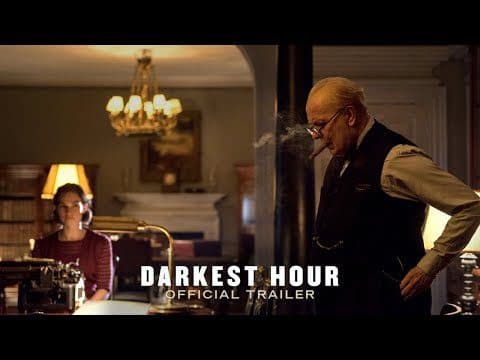
Is 'Darkest Hour' Worth the Watch? A Deep Dive into Churchill's Wartime Crucible
Hey, movie fans and history lovers! You're likely curious if "Darkest Hour" deserves your attention. Spoiler: it does. We will unpack this portrayal of Winston Churchill's critical moment. It’s not just another dry biopic. It provides an engaging look at leadership.
Movie Overview and Plot: Navigating the 1940 Fog of War
Is Darkest Hour Worth Watching?
Let's be direct: yes, "Darkest Hour" is worth your time. It’s not merely history; it’s tension, drama, and Oldman’s incredible performance. Oldman becomes Churchill, gruffness and all. The film immerses you into May 1940, a time when Britain’s fate hung in the balance. You'll feel the pressure and choices faced by leaders.
Is Darkest Hour Based on a True Story?
Now, is it true? Yes, "Darkest Hour" is based on historical facts, focusing on Churchill's early prime minister days in World War II. It shows Britain's dire situation in May 1940 during Nazi Germany's assault across Europe. The film alters some events, but the main choice between peace with Hitler or fighting is factual. It has a Hollywood flair but retains core truths of the era.
What is the Plot of Darkest Hour?
Picture this: May 1940. France collapses rapidly. Chamberlain's appeasement failed. Enter Churchill, reluctantly becoming Prime Minister. He faces a cabinet ready to surrender, a doubtful King George VI, and an unstoppable Nazi force targeting Britain. The plot is a pressure cooker, with Churchill torn between negotiating peace or rallying to fight against overwhelming odds.
The official synopsis states: "The fate of Western Europe hangs on Winston Churchill in WWII's early days. Churchill must decide whether to negotiate with Hitler or fight on against incredible odds." You see Churchill's struggles and determination to challenge the impossible. It’s more about internal battles than physical confrontations—a crucial conflict where history hung in the balance.
What Time Period Was The Darkest Hour Made?
"Darkest Hour" was released in 2017. The film effectively recreates May 1940's tension. It states, "May 1940. The fate of WWII hinges on Churchill, who must choose negotiation or fight to save the British Empire." This time is key. It follows the Norwegian Campaign failure and precedes the Battle of France and Dunkirk. Britain stood vulnerable against Nazi Germany's might.
What is the Story of the Darkest Hour?
The core tale of "Darkest Hour" matters greatly. It centers on leadership under immense pressure during May 1940 when Britain faced doom. It focuses on Churchill's monumental choice: negotiate peace with Hitler or fight, risking failure and devastation?
What is the Message of the Darkest Hour?
What is the key message from "Darkest Hour"? The film conveys resilience, defiance, and principle standing amid adversity. It highlights courage against fear, showing that hope can rise even in despair.
"The Darkest Hour is the story of Winston Churchill and Great Britain's fall in WWII." The main takeaway is fighting for freedom when surrender seems easier. It's about resisting tyranny and fighting for values worth defending. Today’s leaders must embody this moral strength.
Historical Accuracy: Separating Fact from Hollywood Fiction
How Accurate Was the Movie Darkest Hour?
Now let's discuss accuracy. "Darkest Hour" captures the essence of Churchill’s political challenges in May 1940 well. It portrays costumes and characters accurately. However, remember it’s a film, not a documentary. Some artistic license enhances emotion and narrative flow.
Professor Ashley Jackson states, "While much is accurate, condensing weeks into 125 minutes led to inaccuracies." The timeline shifts events into tighter scope, with some fictionalized scenes for dramatic emphasis. Balancing historical fidelity with storytelling leads to creative liberties while offering an informative view of a crucial moment in history.
Fictionalized Events in Darkest Hour
Let’s explore elements where "Darkest Hour" diverges from actual history. It captures the time and Churchill's worries well, yet includes fictionalized moments to enhance drama. As noted, "Darkest Hour is a historical fiction film that...
is generally accurate but includes some fictionalized events. These fictional elements, while not strictly true, illustrate broader truths. They convey the spirit of the time, even if some details are tweaked for cinematic impact.
Accuracy of Churchill Taking the Underground
Ah, the Tube scene! This is perhaps the most widely discussed historical deviation in "Darkest Hour." The scene where Churchill takes the London Underground to gauge public opinion is pure cinematic invention. While powerful and memorable, it is largely fictional.
The Tube scene in "The Darkest Hour" was created to enhance the film. However, it is based on the fact that Churchill sometimes used the Tube. The basis is extremely loose. Churchill was not fond of public transport, particularly during wartime. The scene symbolizes his attempt to connect with the nation. It illustrates his growing conviction to fight on, fueled by the supposed 'voice of the people' he encountered.
Accuracy of Elizabeth Layton's Appearance in the Film
Another historical detail that "Darkest Hour" bends is the timeline of Elizabeth Layton's role as Churchill's secretary. In the film, Layton, played by Lily James, is shown joining Churchill's staff at the start of his premiership in May 1940. This adds a personal element, showing Churchill's interactions with staff amid the crisis.
However, records indicate otherwise. The film shows Elizabeth Layton appearing in 1940, but she didn't join Churchill until May 1941. This is a significant timeline error. Layton became a devoted secretary to Churchill, but her arrival is premature in the film. This fictionalization creates a more immediate narrative arc within the movie, sacrificing historical accuracy for dramatic storytelling.
Underrepresentation of the Labour Party
A notable historical deviation in "Darkest Hour" is the film's portrayal of politics, especially the Labour Party's role. The movie focuses on divisions within the Conservative Party and opposition from figures like Chamberlain and Halifax, who favored negotiation with Hitler. While these conflicts were real, the film downplays Labour's crucial support for Churchill's war policy.
A noteworthy change in "Darkest Hour" is the underrepresentation of Labour. In reality, under Clement Attlee, the Labour Party was vital to Churchill's coalition government and advocated for resisting Nazi Germany. The film's focus on Conservative infighting gives a skewed impression of political unity that was essential to Britain's war effort. Labour's support was critical for enabling Churchill's defiant stance.
Winston Churchill's Character and Life: Beyond the Legend
Did Winston Churchill Actually Take the Underground?
Did Churchill really rub shoulders with common folk on the Tube? The short answer is: highly unlikely. As we've established, this scene is primarily a dramatic invention.
In reality, historical accounts suggest that Churchill would never use the Underground if he could avoid it. However, his cabinet colleague, deputy Prime Minister Clement Attlee, was a regular commuter. Churchill preferred cars' comfort and privacy. The idea of him navigating the crowded Underground in 1940 strains credibility. Attlee’s commuting highlights class differences and underscores Churchill's need to connect with a broader public.
Did the King Support Winston Churchill?
The relationship between King George VI and Winston Churchill in "Darkest Hour" starts strained, evolving into mutual respect and partnership. This portrayal has a basis in reality. The King was initially wary of Churchill, and not without reason.
Historical sources reveal that King George VI had grave doubts about Churchill's judgment. He had supported George's brother, King Edward VIII, during the abdication crisis. This annoyed the Royal Family. The rift with George VI made him cautious about the often unpredictable Churchill. The film captures this skepticism and their relationship's gradual thaw during wartime crisis.
What Happened to Winston Churchill's Secretary?
Elizabeth Layton, depicted in the film, had a long and impactful life beyond her wartime service. She became a respected figure and remained devoted to Churchill's legacy.
Reports confirm that Elizabeth Layton Nel died in her sleep in October at her cottage in South Africa. She was born in England but grew up in Canada. Layton’s life story represents those who served Britain during World War II. Her contributions and dedication highlight the human element behind historical events.
Was Winston Churchill a Good Prime Minister?
The question of whether Winston Churchill was a 'good' Prime Minister is complex. History paints him as a towering figure who inspired Britain and much of the world. However, his legacy has complexities and criticisms.
He has been criticized for imperialism and certain comments on race, alongside wartime decisions like area bombing. Historians rank Churchill as one of Britain's greatest prime ministers. His views were products of his time and are viewed critically today. His leadership during World War II and defiance of Nazism are credited with contributing to Allied victory.
Did Winston Churchill Have Two Wives?
Winston Churchill had one wife: Clementine Hozier, later Clementine Churchill, Baroness Spencer-Churchill. Their marriage lasted over 50 years.
Clementine was Churchill's confidante, advisor, and important figure in her own right. Their relationship was sometimes turbulent but central to Churchill’s life. Clementine played a significant role in supporting his career and navigating public life challenges. "Darkest Hour" rightly focuses on her importance to him.
What Was Winston Churchill Buried With?
Winston Churchill's burial was both a state occasion and personal affair. He was not buried with specific objects but rather in a significant location.
Details of
his final resting place confirm, "St Martin's Church, Bladon, United Kingdom Winston Churchill / Place of burial. Churchill was buried next to his parents and brother in St Martin's Churchyard. The burial was private with only relatives and friends. Lady Spencer-Churchill died on 12 December 1977 at age 92." Churchill chose to rest in Bladon, Oxfordshire, near his birthplace. The contrast between the grand state funeral at St Paul's and the private burial depicts Churchill's complex life – a public figure of great stature, yet also a man rooted in family and personal history.
How Old Was Churchill in 1940?
When Winston Churchill became Prime Minister in May 1940, he was not young. He was a seasoned politician with decades of experience as he entered his twilight years.
Historical records verify, "Winston Churchill was 65 years old when he became Prime Minister of the United Kingdom on May 10, 1940." At this age in 1940, he surpassed the typical retirement age. His age underscores the surprising nature of his rise to power at such a critical moment. He was not the obvious choice; many viewed him as too old. Yet, his experience and resilience became just what Britain needed.
Did Queen Elizabeth II Like Churchill?
The relationship between Queen Elizabeth II and Winston Churchill shows mutual respect and affection. This depiction holds true, reflecting a bond forming between the young Queen and the veteran statesman.
Accounts state, "It seemed fitting that when Winston Churchill met Queen Elizabeth II (the longest-serving monarch), the two became friends and had great mutual respect." Churchill was the first Prime Minister under Queen Elizabeth II since her ascension in 1952. He knew her since she was a child and felt paternal affection. The Queen admired Churchill and recognized his historical significance. Their relationship became a symbol of stability in post-war Britain.
What Did Winston Churchill Say When King George Died?
When King George VI died in 1952, it was a time of national mourning. Churchill, then Prime Minister again, gave a moving radio broadcast honoring the late King. His words captured the nation's grief and highlighted the King's steadfastness during the war.
Reports show, "In his broadcast, Churchill spoke of the late King, who he worked closely with during the war, as having walked with death for the last months “as if death were a companion.” Churchill noted the second Queen Elizabeth, like the first..." His eulogy was personal, reflecting the bond formed during the war years. He praised the King's courage and dignity, resonating with a mourning nation. The broadcast is a testament to Churchill's rhetorical power to articulate national sentiment in crisis and grief.
What Was Winston Churchill's Last Words Before He Died?
In his final moments, Winston Churchill's personality and wit shone through. His last words, as recounted, are poignant and characteristically Churchillian.
Accounts state, "According to those present at his death, Winston Churchill's last words were 'I'm so bored with it all', likely referring to daily life or political squabbles. Churchill died in Kensington, London, on January 24, 1965, at age 90." "I'm so bored with it all" – a fitting farewell from a man who lived a dramatic life of political engagement. These last words capture a weariness with life's mundane aspects after occupying a grand historical stage for so long. Even larger-than-life figures are human; life's final curtain can bring ennui.
How Tall Was Winston Churchill When He Died?
Winston Churchill was not physically imposing but possessed an outsized personality and presence. His stature has been a subject of curiosity.
Measurements indicate, "about 5 feet 7 inches tall According to The Telegraph, Winston Churchill was about 5 feet 7 inches tall. Some sources list him at 5 feet 6 inches." At around 5'7" or 5'6", he was average height for his era, perhaps slightly below. His stocky build combined with his posture often created the impression of a larger figure. His 'shortness' became part of his persona, countering his towering intellect and political influence.
Was Winston Churchill Half American?
Yes, Winston Churchill had an American connection through his mother, Jennie Jerome. This aspect of his background shaped his worldview and relationship with the United States.
Genealogical records conclude, "Yes, Winston Churchill was half American because his mother was Jennie Jerome, an American socialite from Brooklyn, New York." Jennie Jerome was an influential American socialite from a wealthy family. Churchill often expressed pride in his heritage and maintained ties with American circles throughout his life. His background contributed to his understanding of American culture and politics, invaluable during World War II in forging the crucial alliance between Britain and the United States.
Was Churchill Intelligent?
To ask if Winston Churchill was intelligent seems comical. His intellect was legendary. His command of language stood unparalleled; his strategic thinking held influence.
Assessments highlight, "August 18, 2021. Churchill had a quick mind, sharp tongue, and large vocabulary. He loved playing with words — creating new ones, adapting old ones — using words to his advantage." Churchill possessed a formidable intellect with quick wit and vast vocabulary. He wielded words as weapons in debate and inspiring speeches. His intelligence transcended academics; it was practical and strategic, honed through years of political experience and understanding of history and human nature.
Did Winston Churchill Have an Illegitimate Child?
Rumors and speculation have circulated about Winston Churchill possibly having an illegitimate child, specifically Brendan Bracken, a close associate. Despite Bracken's enigmatic claims, credible evidence remains absent.
Investigations conclude, "There was no more enigmatic figure in Churchill's life than Brendan Bracken, who cloaked his birth in mystery while hinting he was Churchill's illegitimate son. Close friendship encompassed their relationship." Bracken cultivated ambiguity about his parentage, possibly enhancing his own mystique. However, historical evidence suggests their relationship remained one of close friendship rather than father and son.
What Was the Age Difference Between Winston Churchill and His Wife?
There was an age difference between Winston Churchill and his wife Clementine, with Churchill being the elder. This gap was common in their era but is significant for understanding their dynamics.
Details reveal, "Ten years older than her, Winston was immediately struck
Winston Churchill admired Clementine's beauty and mind. He proposed after a month. They married in September and had five children during their 56 years together. Their marriage lasted until Winston's death in 1965. He was ten years older than her. Their bond showed respect and love, despite his strong personality.
Why Didn't Winston Churchill Inherit Blenheim Palace?
Blenheim Palace is the home of the Dukes of Marlborough. It is known as Winston Churchill's birthplace. Still, he did not inherit it. Inheritance rules gave it to his relatives.
Reasons for this are clear. Randolph Churchill was Winston's father. He was the third son of the duke. Therefore, Randolph could not inherit the title or the palace. While Winston never owned Blenheim Palace, it was part of his family history. He even proposed to Clementine there. The place held deep significance for him, connecting him to British heritage.
Movie Production and Filming: Bringing 1940s Britain to Life
Where Was The Darkest Hour Filmed?
The film "Darkest Hour" captures wartime Britain splendidly. This comes from the careful production design and the filming locations. Filmmakers used various sites across England to recreate the 1940s.
Filming details state, "The 2017 film Darkest Hour was filmed in Manchester, London, Kent, and Yorkshire." The production team planned these locations well.








Responses (0 )