

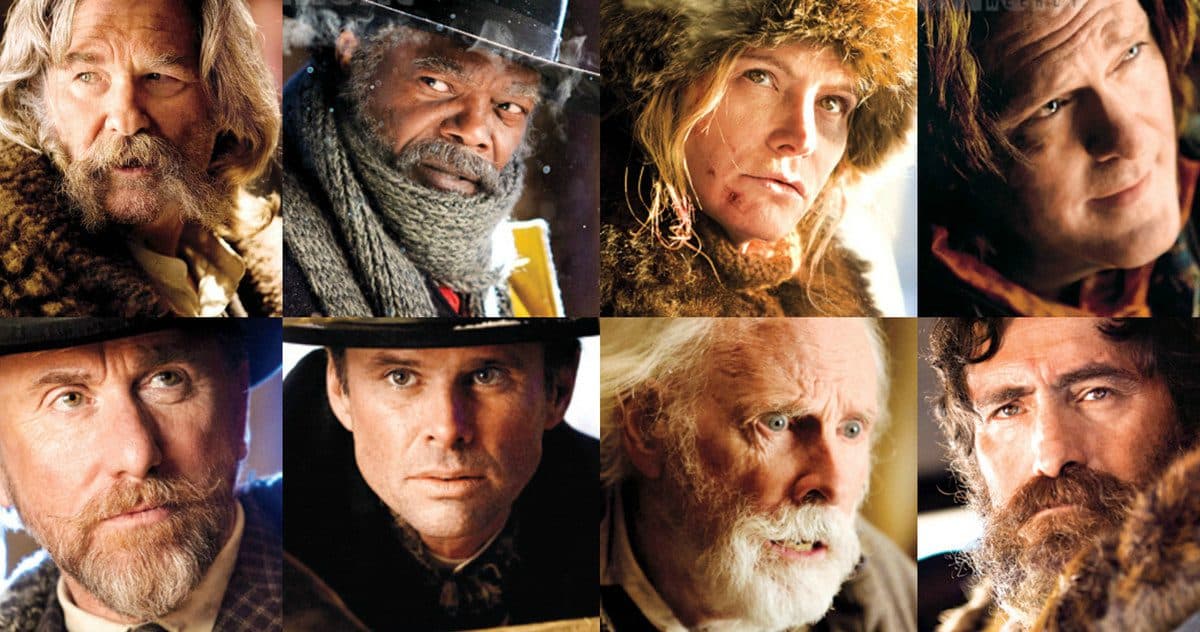
Ah, The Hateful Eight. The title brings to mind blizzards, tensions, and Quentin Tarantino's style. Was it actually good? Let's dive into this western and explore everything, from box office results to key details and some mustache wisdom.
Was The Hateful Eight Actually a Good Movie? A Critical Overview
So, was The Hateful Eight worth it? Many say yes. One review called it "alive with great performances and breathtaking visuals, a story that rushes by in three hours." They labeled it a "genre-splicing classic," a nod to Tarantino's trademark. Don't forget the praise for the "fresh score," a character in itself here.
Visually, the film is stunning. Shot in Ultra Panavision 70mm, it’s like gazing into a widescreen painting of the Wild West filled with malice and questionable mustaches. American Cinematographer provides details on the technical mastery behind the visuals for cinephiles.
However, not everyone agreed. Some critics were frosty towards The Hateful Eight. They called it "cluttered," "overwritten," and "unmemorable." One review stated, "the dialogue is the flattest Tarantino has committed," and claimed the "plot is dull..." Ouch.
The core complaint was a lack of narrative depth. Critics said it had "a lot of talk with little payoff," and criticized the "stagnant plot" at Minnie's Haberdashery, with overly verbose dialogue lacking sharpness. They viewed characters as "unengaging" caricatures. The film's brutality felt "gratuitous," detracting from emotional engagement. Some felt stuck in a cabin of chatter without caring about who shot whom.
As for the Tarantino factor: is it disturbing? While it wasn't labeled explicitly as "disturbing," it's a Tarantino film. Expect violence, tension, and morally ambiguous characters. Squeamish viewers may want to choose Paddington instead. But Tarantino fans will find the intensity right up their alley.
Show Me the Money: The Hateful Eight at the Box Office
Let's discuss the numbers. Did The Hateful Eight shine at the box office, or get lost in the crowded field? The film earned $54.1 million in the US and Canada and an impressive $107.1 million internationally. Not bad for a three-hour western mostly set in one room.
Its opening weekend made $15.7 million. People were curious about Tarantino's latest offering. However, it wasn't Star Wars: The Force Awakens numbers. Competing with that was nearly impossible.
Compared to Tarantino's past hits, The Hateful Eight landed in the middle. It outperformed some films but didn't reach the heights of Django Unchained or Inglourious Basterds. Django more than tripled its domestic haul, showing revenge westerns with a lighter tone resonate more.
So, was it a flop? No. But was it a blockbuster? Also, no. Consider it a solid hit like a dependable stagecoach. It wasn't a box office gunslinger yet held its own during the holiday season, proving Tarantino still has draw power, even if it’s not always a gold rush.
Accolades and Applause: Awards Season for The Hateful Eight
Despite the mixed reception, The Hateful Eight earned several nominations and accolades. It entered awards season with acclaim, garnering nods from prestigious organizations. This list includes Academy Awards, the Alliance of Women Film Journalists, and the BAFTA crowd.
While win details aren't specified, the nomination volume suggests strong elements caught awards voters’ attention. It had enough merit in performances and visuals to stand out. Sometimes critical divisiveness can contrast with awards recognition for technical achievements.
Setting the Stage: Plot and Storyline of The Hateful Eight
Now, let’s take a look at the plot. The Hateful Eight is set in post-Civil War Wyoming. The narrative unfolds with Major Marquis Warren, a Black bounty hunter, played by Samuel L. Jackson, catching a ride on a stagecoach. He’s transporting three outlaw bodies for a reward in Red Rock.
John "The Hangman" Ruth, played by Kurt Russell, accompanies him on the journey. Ruth's cargo is Daisy Domergue, a fugitive played by Jennifer Jason Leigh, and she’s handcuffed to him. Not exactly friendly travel companions.
Blizzard conditions force them into Minnie's Haberdashery. That's where things get interesting. As Tarantino described, imagine a cold soundstage chilled to 30° Fahrenheit with high humidity for visible breath. That's commitment!
Inside Minnie's, they confront a group of characters hiding secrets, contributing to a pot of suspicion. This setting becomes a pressure cooker for a slow-burn thriller. Dialogue serves as the main weapon, and trust is rare, even rarer than whiskey in dry areas.
Interestingly, Tarantino's original ending was even darker. Picture Warren, shot by Jody (Channing Tatum's character), falling, then Daisy finishing him off. Grim stuff. Another version had Chris Mannix surviving a massive shootout, contrasting with the final ending.
What's the moral? It's murky. One interpretation suggests "putting differences aside to do the right thing," even amid hatred. Here, "the right thing" reflects brutal justice. Yet, another view argues "everyone was hateful," lacking moral clarity. Maybe the point isn't a clear takeaway but a stark look at human nature's ugliness in isolation and mistrust. Choose your own interpretation.
For a detailed breakdown of the film's timeline, Screen Rant has a complete timeline explainer for those who prefer to keep narratives in order.
Meet the Hatefuls: Cast and Characters Breakdown
Let’s get acquainted with the infamous eight, or perhaps nine, if you count differently.
The Hateful Eight is a character-driven drama set in a western backdrop. The ensemble cast is stellar and dynamic.
- Major Marquis Warren (Samuel L. Jackson): A past bounty hunter armed with a forged Lincoln letter. Jackson portrays Warren with intensity. The letter serves as his shield, helping him in a dangerous world.
- John "The Hangman" Ruth (Kurt Russell): The second bounty hunter. He brings captives alive to Red Rock to hang. Ruth represents gritty justice, though he naively falls for Warren’s deception. Tragically, he ends up shot and poisoned.
- Daisy Domergue (Jennifer Jason Leigh): The only female in the male-dominated mix. Leigh shows a controlled rage. Daisy tries to use Warren's deception against him, revealing her cunning. Her interactions with Ruth showcase a power struggle.
- Chris Mannix (Walton Goggins): Claims to be the sheriff of Red Rock. Goggins adds charm and danger to Mannix. His true loyalties remain unclear, and he serves as a complex secondary protagonist alongside Warren.
- Oswaldo Mobray/Pete Hicox (Tim Roth): Claims to be the hangman. Roth brings theatrical flair, hiding his real identity as English Pete Hicox, a wanted criminal. The truth is he’s more likely the one to be hanged.
- Joe Gage (Michael Madsen): The quiet cowboy. Madsen adds stoic intensity to Gage. While others focus on Warren, Gage poisons the coffee, showing quiet ones may be the most lethal.
- Bob/Marco (Demián Bichir): The Mexican caretaker of Minnie's haberdashery. Bichir plays Bob with nervous energy, hinting at secrets. His true identity leads to his demise at Warren’s hands.
- Jody (Channing Tatum): The wildcard. Tatum's character lurks under the floorboards, adding suspense. Jody is a hidden threat, loyal to Daisy and deadly.
The body count is high: Ruth is killed by Daisy and Gage; Bob dies at Warren's hands; Jody is shot by Warren, and Daisy is hanged by Warren and Mannix. Surviving characters are Mannix and Warren and both are wounded. Their moral standing is questionable. The original script had Mannix as the sole survivor, emphasizing survival's moral complexities.
Is there a good guy in this film? Tarantino suggests no. The Hateful Eight presents a cast of flawed individuals in a violent world. Daisy, Warren, General Smithers are all villains. Even seemingly less evil characters are selfish and prejudiced. Morality itself appears twisted in this environment.
Behind the Blizzard: Filming and Production Secrets
Let's look at The Hateful Eight's production. Tarantino aimed for authenticity. Interior scenes shot at Red Studios, while exteriors filmed near Telluride, Colorado. They used real snow during filming, contributing to the period feel.
In interior scenes, temperature was 30°F with high humidity. It made actors' breath visible for realism. Jackson noted nothing prepared them for the cold conditions.
Tarantino used old-school techniques. He filmed with Ultra Panavision 70 lenses on 65mm film, later projecting it in 70mm. This commitment to detail made the snowy scenery immersive. MovieWeb praises this visual style.
Kurt Russell dedicated himself to the role, even altering his facial hair. He grew a "massive" mustache for John Ruth, cutting his beard but letting the mustache flourish.
The infamous guitar incident occurred during a scene with Russell. He accidentally smashed a genuine Martin guitar instead of a prop. What should have been a simple act became legendary due to its real-world impact.
The Lincoln Letter: Fact or Forgery?
The letter Warren possesses is not real. It’s a forgery he created for safety. In the charged post-Civil War environment, such a letter carries weight, allowing Warren to navigate danger. Ruth believes in its authenticity at first.
This forgery showcases Warren's cunning. He manipulates symbols of authority to his advantage. The letter reveals both motivations and reflects mistrust that runs throughout the film.
The Poisoned Coffee: A Deadly Brew
The poisoned coffee adds a classic twist. Here, it contains an anticoagulant, likely sodium-based. Joe Gage seizes the moment during the standoff to slip poison into the coffee pot, emphasizing hidden agendas and betrayals.
Tarantino-Verse Connections: Django and Beyond
Did The Hateful Eight emerge from nowhere? It connects with Tarantino's wider filmography. Interestingly, it
The Hateful Eight began as a potential sequel to Django Unchained. Tarantino thought of it as a novel titled Django in White Hell. Elements of The Hateful Eight come from this abandoned novel. This marks its shift from a revenge western sequel to an independent chamber piece.
Even if it is not a direct sequel, thematic and stylistic links to Django are clear. Both films are revisionist westerns that explore race, violence, and American history from different perspectives. While some view parallels to The Thing, the content does not draw explicit links. The common themes of a claustrophobic space, paranoia, and an internal enemy create echoes in the film.
Controversy and Criticism: The Dark Side of The Hateful Eight
The Hateful Eight garnered its share of controversy. Critics claimed it features "excessive violence," which some deemed "gratuitous." This did not align with who Tarantino is, yet complaints arose about the brutality feeling excessive even for him.
A stagnant plot and verbose dialogue were also common issues raised by audiences. The confined setting, with heavy reliance on dialogue, led many to perceive the plot as monotonous. While Tarantino is known for his sharp writing, others criticized it as "repetitive" in this film. Complaints about "unengaging characters" surfaced too. Critics argued that characters lacked depth, defined only by violence, hindering audience investment.
The Guitar Smash Heard 'Round the World: The Guitar Incident Revisited
Let's revisit the guitar incident. The unintentional destruction of a genuine Martin guitar became its own controversy. Russell smashed a priceless antique instead of a replica. This on-set chaos went viral among cinephiles. The guitar, dating back to the 1870s, was on loan from the Martin Guitar Museum. It was indeed priceless and very valuable. Estimates for its worth ranged from $25,000 to potentially over $45,000. Such events remind us that even manual sets can lead to surprising accidents, some of which become part of the film's lore.
Oscar Buzz and Beyond: Awards and Actors
The Hateful Eight won an Oscar for Best Original Score by Ennio Morricone. This honor rightly belonged to the legendary composer. However, the film’s Oscar journey also raised contentious debates. The content mentions "Worst Oscar Wins of the 21st Century," yet The Hateful Eight didn’t appear on such lists. This suggests that the film's recognition wasn’t overly controversial. Prevailing debates surround films like Crash and Green Book, which won Best Picture.
In discussing Oscars and controversy, actors who refused or were banned from ceremonies are notable too. Marlon Brando sent Sacheen Littlefeather to decline his Oscar in protest. Others like Will Smith and Harvey Weinstein faced bans following controversial actions. Such stories illustrate the tumultuous relationship between art and awards, which Tarantino knows well.
Odds and Ends: Lingering Questions About The Hateful Eight
Lastly, we can address some intriguing questions. What’s with the title The Hateful Eight? One theory connects it to Tarantino’s eighth film, depending on how to count Kill Bill Volumes 1 & 2. Still, some connect a ninth character, Jody, hidden beneath the floorboards, tweaking the title count slightly. “The Hateful...Ish Eight or Nine” lacks the same appeal.
What about the striking yellow color? The Union soldier's yellow scarf symbolizes cowardice. A "yellow stripe painted down his back" represents dishonorable discharge from the Union army. This serves as a subtle hint toward character backstory.
Concerning foot scenes, Tarantino's fascination with feet is evident. The Hateful Eight and Django feature "shots of feet," although fully clad. In Once Upon a Time in Hollywood, the focus on feet is far more apparent. Yes, there’s a foot element, yet it may not be as obvious as in other films.
Is there a connection between The Ridiculous 6 and The Hateful Eight? No direct connections exist despite similar titles or western themes. Each film stands alone with its tone, plot, and quality. For those seeking westerns, Tarantino remains the preferred choice.
Thus, we have The Hateful Eight. It’s a dialogue-centric, snow-covered film that divides audience opinion. Whether people love or hate it, it's Tarantino’s essence shining through clearly. That alone provides ample discussion material.







Responses (0 )